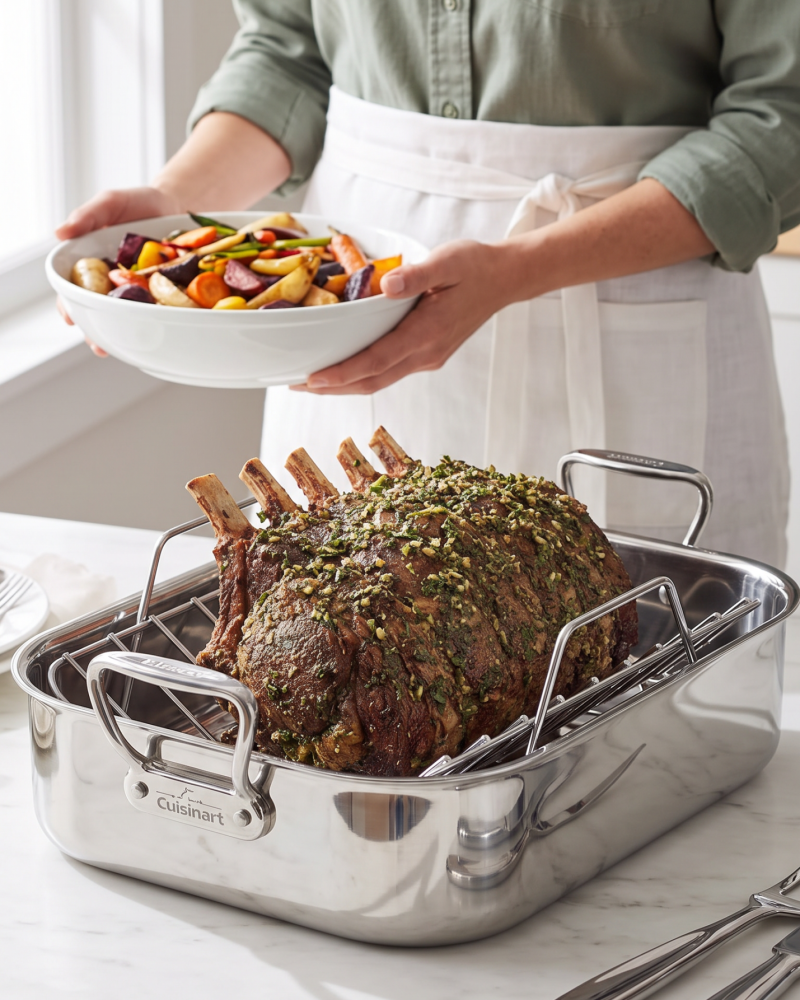
Roasted Prime Rib

with Garlic-Shallot Crust

A classic prime rib roast gets the fine-dining treatment with a savory garlic-shallot crust, aromatic herbs, and slow, careful roasting. The result is beautifully tender beef with a deeply flavorful exterior and an impressive presentation worthy of Christmas dinner, New Year’s Eve, or any occasion that calls for something extraordinary.

THE RECIPE
Roasted Prime Rib with Garlic-Shallot Crust

PREPARATION
See Chef Nico’s recipe card

COOK / YIELD
See Chef Nico’s recipe card

LAND2SHORE / FROM CHEF NICO’S KITCHEN

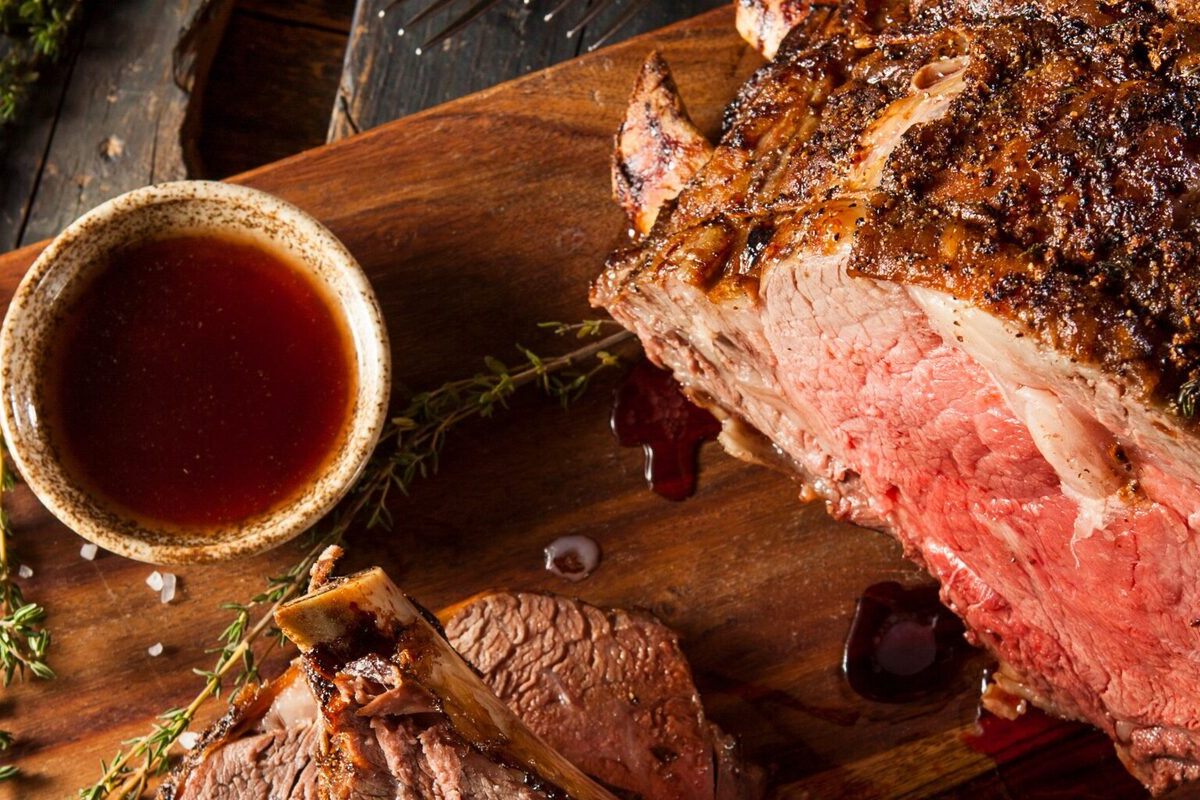
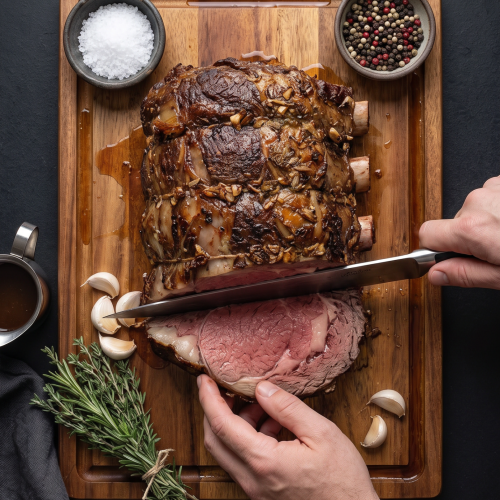
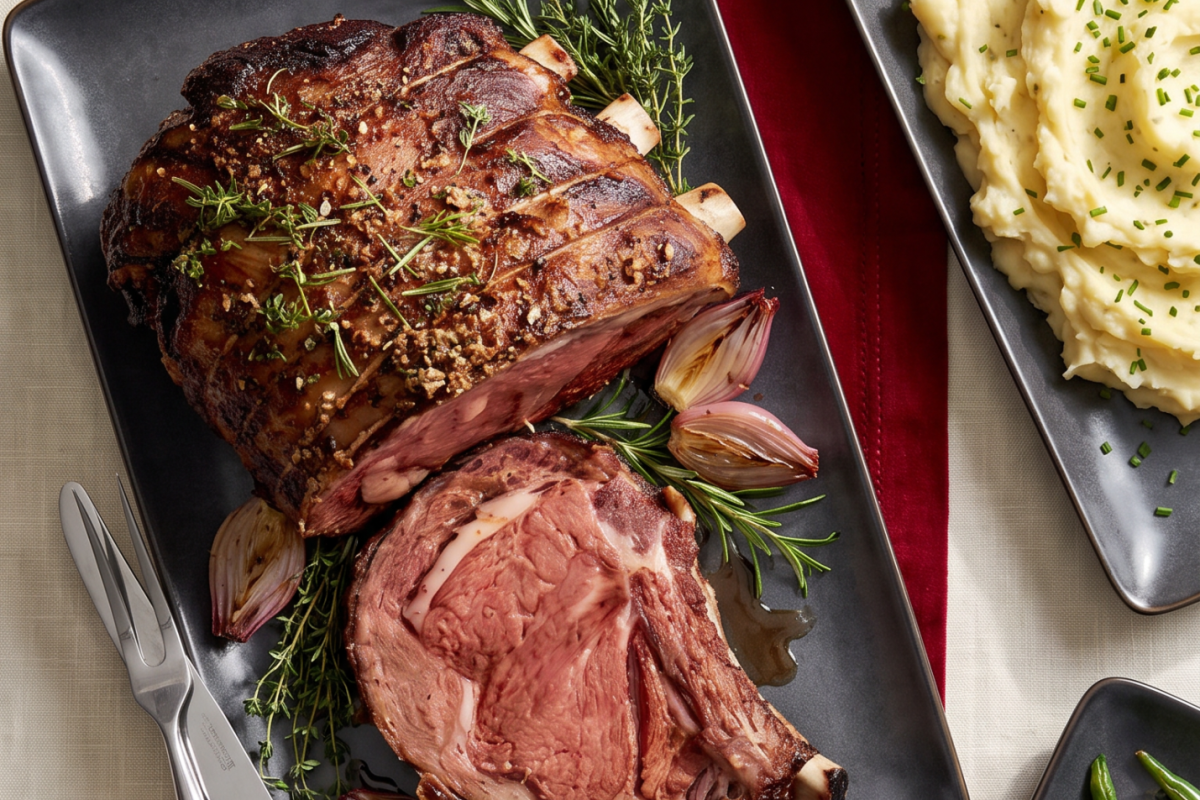
Roasted garlic-shallot prime rib sliced and served with beef jus
The Roast That Owns the Holiday Table

Some dishes don’t need an introduction. Prime rib is one of them. Bring a beautifully roasted standing rib roast to the table, and suddenly everyone is paying attention. There’s something wonderfully old-fashioned about carving a generous roast for family and friends, particularly during the holidays when dinner deserves to be a little more memorable.

The secret isn’t a complicated collection of ingredients. It’s the balance between excellent beef, thoughtful seasoning, and proper roasting. Garlic and shallots bring savory sweetness to the crust, while herbs add an aromatic finish that complements the richness of the beef rather than competing with it. A well-developed exterior and a tender, rosy center do the rest.

And while prime rib has a reputation for being a special-occasion undertaking, it’s surprisingly approachable when you understand the fundamentals. A reliable meat thermometer, a little patience, and the discipline to let the roast rest before carving make all the difference. The best part? Once the roast is in the oven, there’s very little fussing required. Which leaves more time for the important things—setting a beautiful table and enjoying that first glass of wine.

Follow Chef Nico’s printable recipe for the exact method, order, temperatures and timing.

The Ingredients

Beef, Garlic & Shallots

Choose a well-marbled standing rib roast. Garlic, shallots, fresh herbs and balanced seasoning build an aromatic crust without overwhelming the beef.

Find precise measurements and the complete ingredient list in Chef Nico’s printable recipe card below.

Before You Begin

Have a roasting pan, rack, digital meat thermometer and sharp carving knife ready. Check the printable recipe for prep time, cooking times, temperatures and yield.

The full measured recipe, printable instructions and food-safety notes appear below.

AI-image-5-for-Cuisinart-16-Inch-Chefs-Classic-Roasting-Pan.webp

ROASTED PRIME RIB WITH GARLIC-SHALLOT CRUST

Let's COOK, Step by Step

Follow Chef Nico’s printable recipe for the exact method, order, temperatures and timing.

AI-image-6-for-Winsome-Acacia-Wood-Cutting-Board.webp

01 | Season the Beef

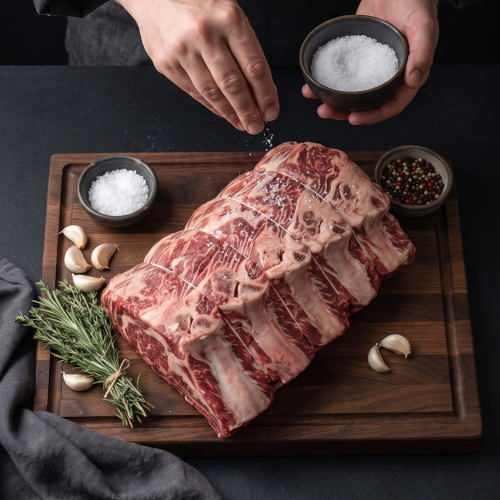
A great prime rib starts long before it reaches the oven. Begin with a beautifully marbled roast, preferably one with an even layer of fat across the top. That marbling is what gives prime rib its signature richness and tenderness, so this is one occasion when a little extra fat is a very good thing.

Pat the roast thoroughly dry with paper towels before seasoning. Removing excess surface moisture helps the exterior brown properly instead of steaming. Apply the salt and pepper evenly, paying attention to the sides and ends of the roast rather than concentrating everything on the top.

If you’re seasoning ahead, leave the roast uncovered on a rack in the refrigerator as directed in the recipe. This gives the salt time to penetrate the meat while allowing the exterior to dry slightly, creating a better foundation for that beautiful roasted crust.

Chef’s Tip: Don’t confuse a dry surface with dry meat. You’re removing moisture from the outside, not the inside. That small distinction makes a surprisingly big difference.

AI image 9 for Winsome Acacia Wood Cutting Board

02 | Prepare the Garlic-Shallot Crust

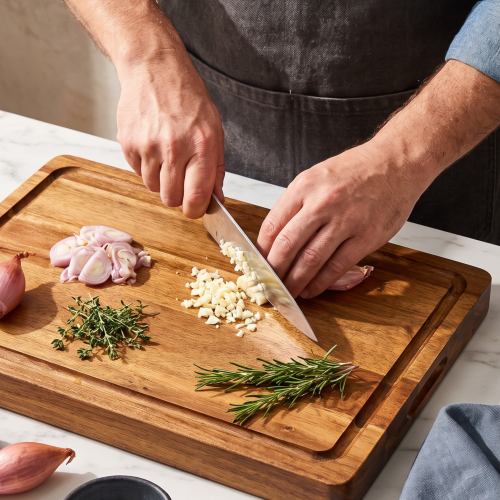
This is where the roast starts developing its personality. Garlic brings a bold, savory foundation, while shallots provide a more delicate sweetness that mellows beautifully during cooking. Fresh herbs round everything out with an aromatic finish.

Finely mince the shallots and garlic, keeping the pieces relatively uniform. Large chunks are more likely to brown unevenly, and nobody wants a bitter piece of burned garlic interrupting an otherwise perfect bite of prime rib.

Combine the aromatics with the remaining crust ingredients according to Chef Nico’s recipe. Mix thoroughly so the garlic, shallots, and herbs are distributed evenly. The goal is a cohesive, flavorful coating that complements the natural richness of the beef without overpowering it.

Chef’s Tip: Fresh garlic and shallots are worth the extra few minutes of preparation. Their texture and natural oils contribute to a crust that dried seasonings alone can’t quite replicate.

AI image 6 for Cuisinart 16-Inch Chef's Classic Roasting Pan

03 | Coat and Arrange

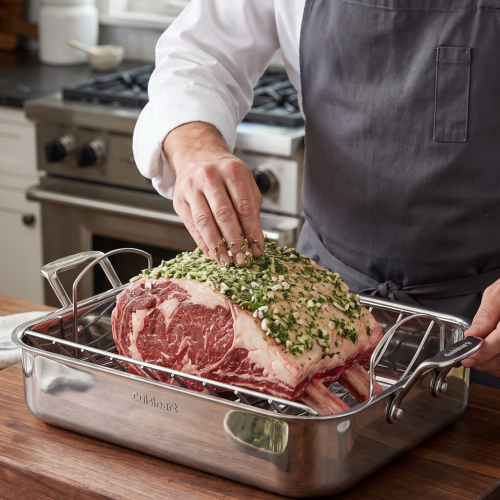
Once your crust mixture is ready, it’s time to bring everything together. Apply the garlic-shallot mixture according to the recipe, spreading it evenly over the appropriate surfaces of the roast. Avoid piling the aromatics into thick patches, which can cook unevenly.

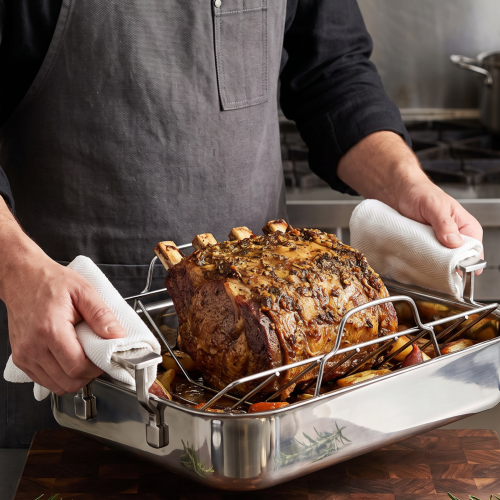
Position the prime rib securely in a heavy-duty roasting pan, using a rack if directed. Elevating the roast allows hot air to circulate around the meat and keeps the bottom from sitting directly in the rendered fat and juices.

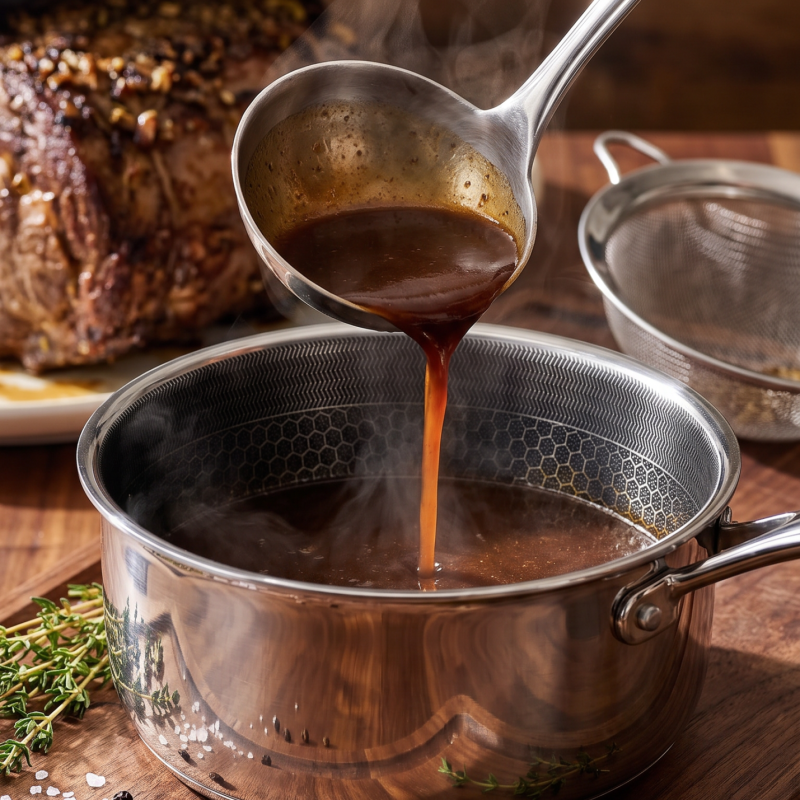
A sturdy roasting pan also provides a place to collect those flavorful drippings. They’ll become the foundation for a rich, savory jus that deserves a place alongside every slice.

Chef’s Tip: Give the roast room to breathe. A pan that’s too small can trap moisture and interfere with browning. And remember that garlic and shallots can scorch during prolonged high-heat roasting, so follow the recipe’s directions for when to apply the crust.

AI-image-12-for-Winsome-Acacia-Wood-Cutting-Board.webp

04 | Roast, Rest and Carve

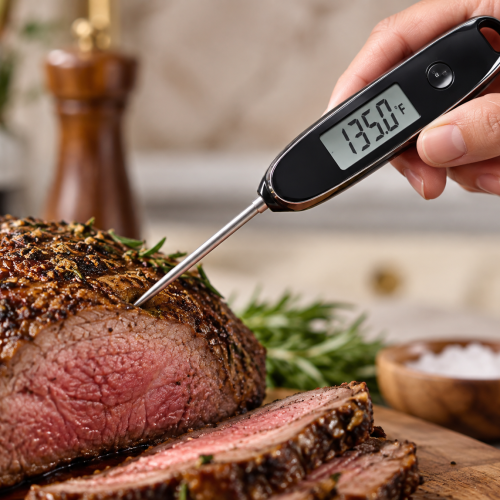
Roasting prime rib is less about constantly checking the oven and more about understanding what’s happening inside the meat. Follow Chef Nico’s specified roasting temperatures and cooking method, monitoring the internal temperature with a reliable meat thermometer inserted into the thickest part of the roast, away from the bone.

As the beef cooks, the exterior develops a deep, savory crust while the interior gradually reaches its target temperature. Remember that the temperature will continue rising after the roast leaves the oven, a process known as carryover cooking. USDA guidance recommends an internal temperature of 145°F followed by at least a three-minute rest for beef roasts; lower temperatures often used for pink prime rib do not meet that recommendation.

Once the roast is finished, transfer it to a carving board and allow it to rest. This gives the juices time to redistribute rather than immediately spilling onto the board when sliced.

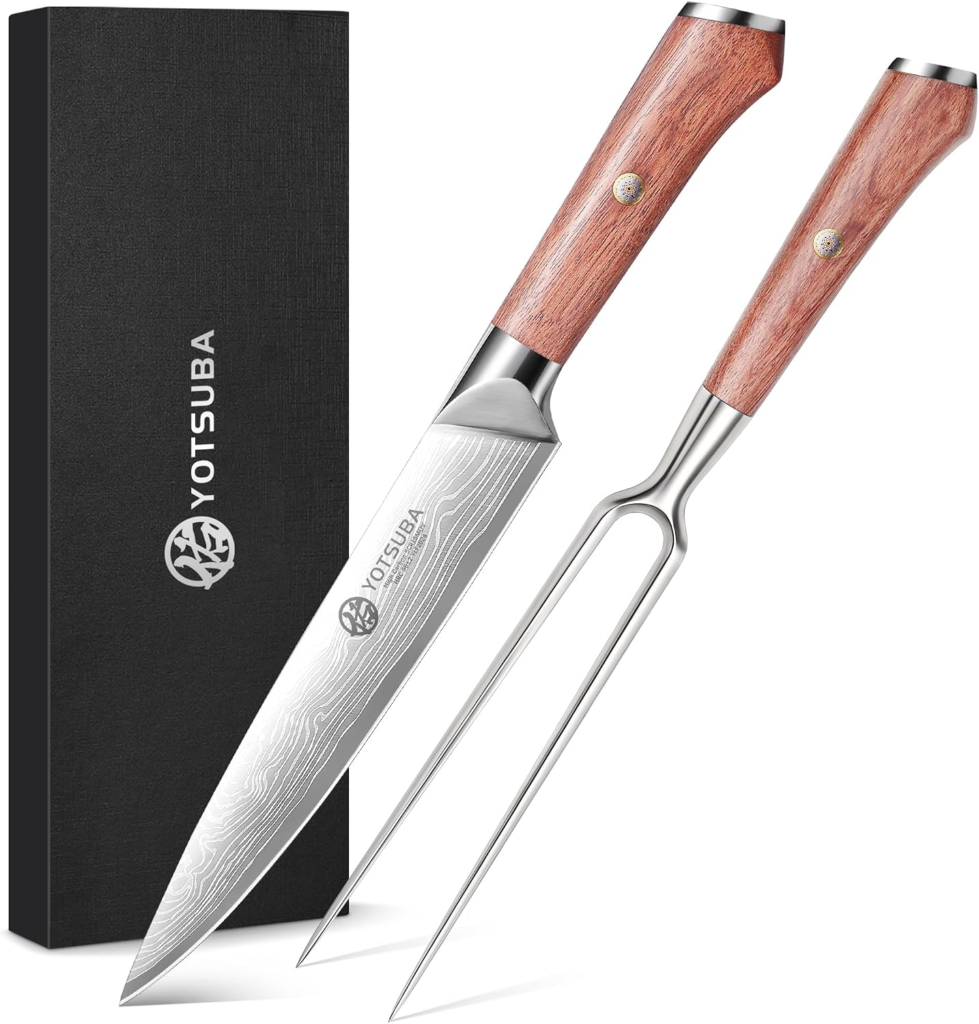
For a bone-in roast, remove the rib bones before carving. Using a sharp carving knife, cut generous, even slices across the grain. Arrange them on a warmed platter with a little jus, fresh thyme, and perhaps a few roasted shallots.

Chef’s Tip: A sharp knife makes a cleaner slice and preserves that beautiful crust. Use long, smooth carving strokes rather than sawing back and forth through the beef.

FROM THE CHEF

Chef Nico’s Notes

Choose well-marbled beef. Quality matters here, and a well-marbled Choice roast can be excellent.

Mind the garlic. Garlic and shallots can become bitter when overbrowned, so follow the crust timing.

Trust the thermometer. Roast size and ovens vary more than you might think.

Rest before carving. Carryover cooking continues after the roast leaves the oven.

Save those drippings. Skim excess fat and taste before adding more salt.

Food safety: USDA recommends cooking beef roasts to 145°F followed by at least three minutes of rest. Lower temperatures for traditional pink prime rib do not meet that recommendation.

AROUND THE TABLE

Build the Perfect Holiday Menu

AI image 4 for Famiware 3-Piece Rectangular Serving Platter Set
AI-image-3-for-HexClad-2QT-Hybrid-Nonstick-Saucier-with-Lid.webp


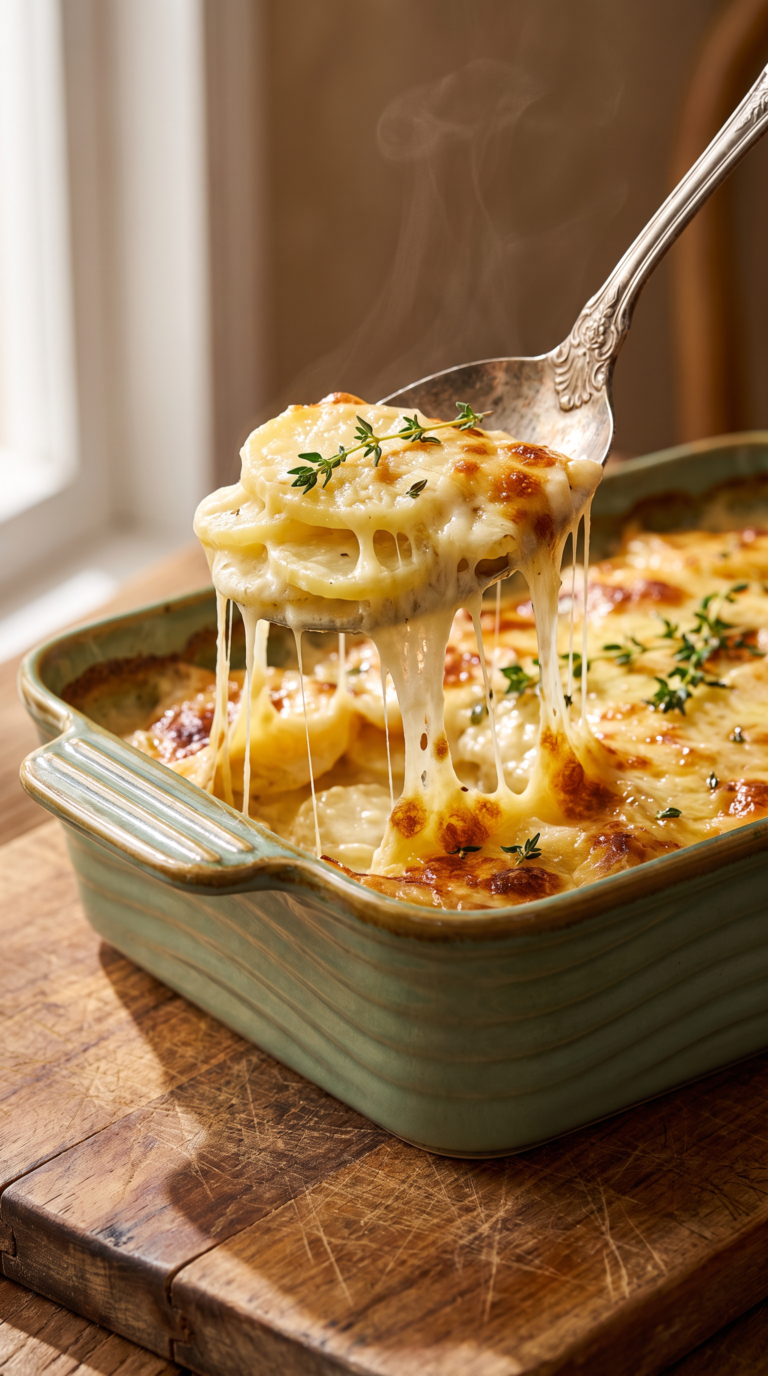
  • Potatoes: Creamy Parmesan Potato Gratin with Garlic and Gruyère — luxurious, golden, and an ideal companion to prime rib.

  • Vegetables: Garlic Green Beans with Lemon and Toasted Almonds — fresh acidity and crunch to balance the richness.

  • Sauce: Horseradish cream, red wine jus, or the roast’s own defatted pan juices.

  • Wine pairing: Cabernet Sauvignon, Bordeaux, or a beautifully structured Syrah. Their tannins work particularly well with rich beef.

  • Cocktail pairing: A classic Manhattan or a rosemary-infused Old Fashioned.

  • Nonalcoholic pairing: Sparkling cranberry-rosemary spritz with a restrained touch of citrus.

Chef’s entertaining tip: Keep the garnishes simple. A handsome carving platter, a little fresh thyme, and a small pitcher of warm jus look far more elegant than an elaborate arrangement covering the meat.

KEEP THIS RECIPE

Print
clockclock iconcutlerycutlery iconflagflag iconfolderfolder iconinstagraminstagram iconpinterestpinterest iconfacebookfacebook iconprintprint iconsquaressquares iconheartheart iconheart solidheart solid icon
Roasted garlic-shallot prime rib sliced and served with beef jus

Roasted Prime Rib with Garlic-Shallot Crust

Recipe by Chef Nico Rossi

5 Stars 4 Stars 3 Stars 2 Stars 1 Star

No reviews

A showstopping boneless prime rib with a deeply browned garlic-shallot crust, a rosy center, and a simple pan jus.


  • Total Time4 hours 50 minutes
  • Yield8 servings 1x

Ingredients

Scale

Garlic-Shallot Crust

  • 4 garlic cloves, unpeeled
  • 1 large or 2 small shallots, halved and unpeeled
  • 1 1/2 tbsp olive oil
  • Kosher salt and cracked black pepper, to taste

Prime Rib and Pan Jus

  • 1 boneless prime rib roast, 5 to 6 lb, trimmed to about 1/2 inch of fat
  • Flaky sea salt and cracked black pepper, to taste
  • 1/4 cup unsalted beef stock or water

Instructions

Garlic-Shallot Crust

  1. Make the roasted garlic-shallot purée: Preheat the oven to 375°F. Place the garlic cloves and shallot halves on a small sheet of foil. Drizzle with olive oil and season lightly with salt and pepper. Wrap loosely and roast for 45 minutes, until caramelized and tender. Squeeze the garlic and shallot flesh into a small bowl, mash into a smooth purée, and cool completely.

Prepare and Roast

  1. Prepare the roast: Remove the prime rib from the refrigerator while you prepare the crust, no more than 30 minutes before roasting. Pat it thoroughly dry with paper towels. Place the roast fat-side up on a rack fitted inside a large roasting pan.
  2. Apply the crust: Coat the top and sides evenly with the cooled garlic-shallot purée. Season on all sides with fleur de sel and cracked black pepper. Roast once the crust is applied.
  3. Roast: Increase the oven temperature to 450°F. Place the roast in the oven and immediately reduce the temperature to 325°F. Roast uncovered until a thermometer inserted into the thickest part reaches 145°F. Begin checking after about 1 1/2 hours; a 5 to 6 lb roast may take about 1 3/4 to 2 1/2 hours. Oven time varies, so use the thermometer.
  4. Rest: Transfer the roast to a carving board and tent loosely with foil. Rest for 25 to 30 minutes. Rest at least 3 minutes for food safety; the longer rest helps keep the juices in the meat.

Pan Jus and Serving

  1. Make the pan jus: Place the roasting pan over medium-high heat. Add the beef stock or water and scrape up the browned bits. Simmer for 2 minutes, season to taste, and strain into a warm sauceboat.
  2. Carve and serve: Slice the roast across the grain into thick, even slices. Serve with warm pan jus and fleur de sel at the table.

Notes

Use a well-marbled 5 to 6 lb boneless roast trimmed to about 1/2 inch of fat. The garlic-shallot crust can be made up to 2 days ahead and refrigerated. Cook to 145°F and rest at least 3 minutes; lower doneness temperatures carry a greater foodborne illness risk. For a larger gathering, cook additional roasts rather than multiplying the roasting time. Refrigerate leftovers in shallow containers within 2 hours and use within 4 days.

  • Prep Time: 1 hour 50 minutes
  • Cook Time: 2 hours 30 minutes
  • Category: Main Dishes

CHEF NICO’S ESSENTIALS

Ready, Set, Roast

Our favorite kitchen essentials for preparing this holiday roast: a sturdy roasting pan, a dependable meat thermometer and a good carving set. Choose your product links and photographs before publishing.

AI image 10 for Cuisinart 16-Inch Chef's Classic Roasting Pan
Roasting Pan with Rack
Medium-Rare-Roast-Temperature-Check.webp

Digital Meat Thermometer

Carving Knife & Fork Set

As an Amazon Associate, Land2Shore earns from qualifying purchases.

You Didn’t Come Here for a Pop-Up … 

So We Don’t Use Them!


Nobody likes browsing a beautiful website only to have something jump out like a jack-in-the-box! 

We believe inspiration should be fun, not startling.

You’ll find thoughtfully selected links throughout our site, including some that may earn us a small commission at no extra cost to you. They’re simply there to make your experience easier and more enjoyable.

Your visits are appreciated, your support means the world, and clicking is always optional. 

No pressure, no pop-ups, just good inspiration!

Join the Land2Shore List

Recipes, hosting ideas, and resort-inspired living—delivered once a month.