Nantucket Harbor Style
There is something about Nantucket that makes “coastal” feel entirely different.
It isn’t a place defined by turquoise water, palm trees or rooms filled with seashells. Nantucket’s beauty is quieter. Weathered shingles fade silver in the salt air. Hydrangeas spill over old fences. Narrow streets lead toward the harbor, and houses that have stood for generations sit behind clipped hedges and simple gates.
Inside, the best Nantucket homes have that same sense of permanence. They are comfortable without being casual, elegant without feeling precious, and coastal without needing to announce it.
That is the inspiration behind our Nantucket Harbor style.
A Style Shaped by the Sea
To understand Nantucket style, it helps to understand a little about the island itself.
During the eighteenth and early nineteenth centuries, Nantucket grew into one of the world’s great whaling centers. The harbor was surrounded by the trades that supported ships going to sea—sail lofts, cooperages, blacksmiths, boatbuilders, warehouses and ship chandlers. Successful voyages also connected Nantucket with a much larger world. Ships involved in international trade returned with goods such as porcelain, silk and other objects that eventually found their way into prosperous island homes.
That history gives us a wonderful clue for decorating in the Nantucket Harbor style.
A Nantucket-inspired room shouldn’t look as though everything arrived from the same furniture showroom last Tuesday.
It should feel collected.
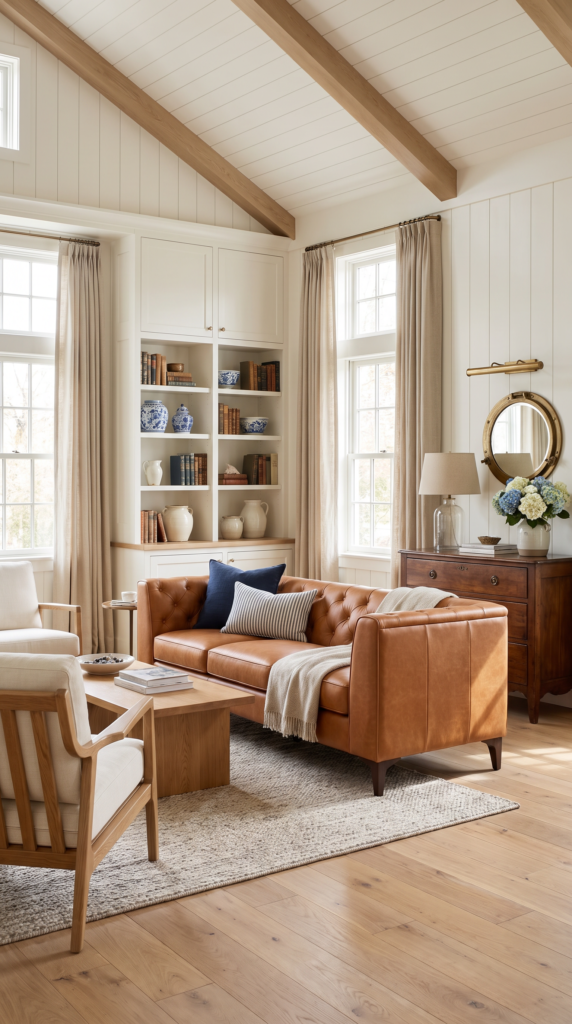
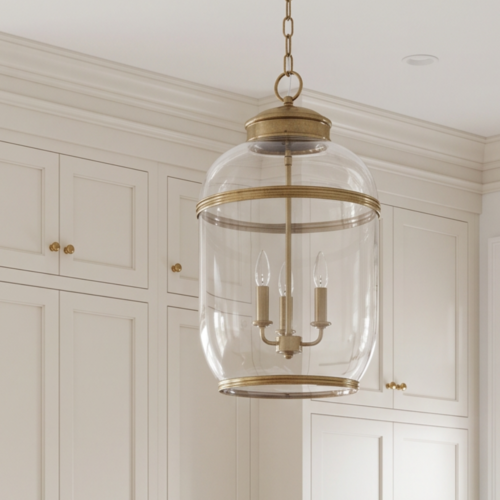
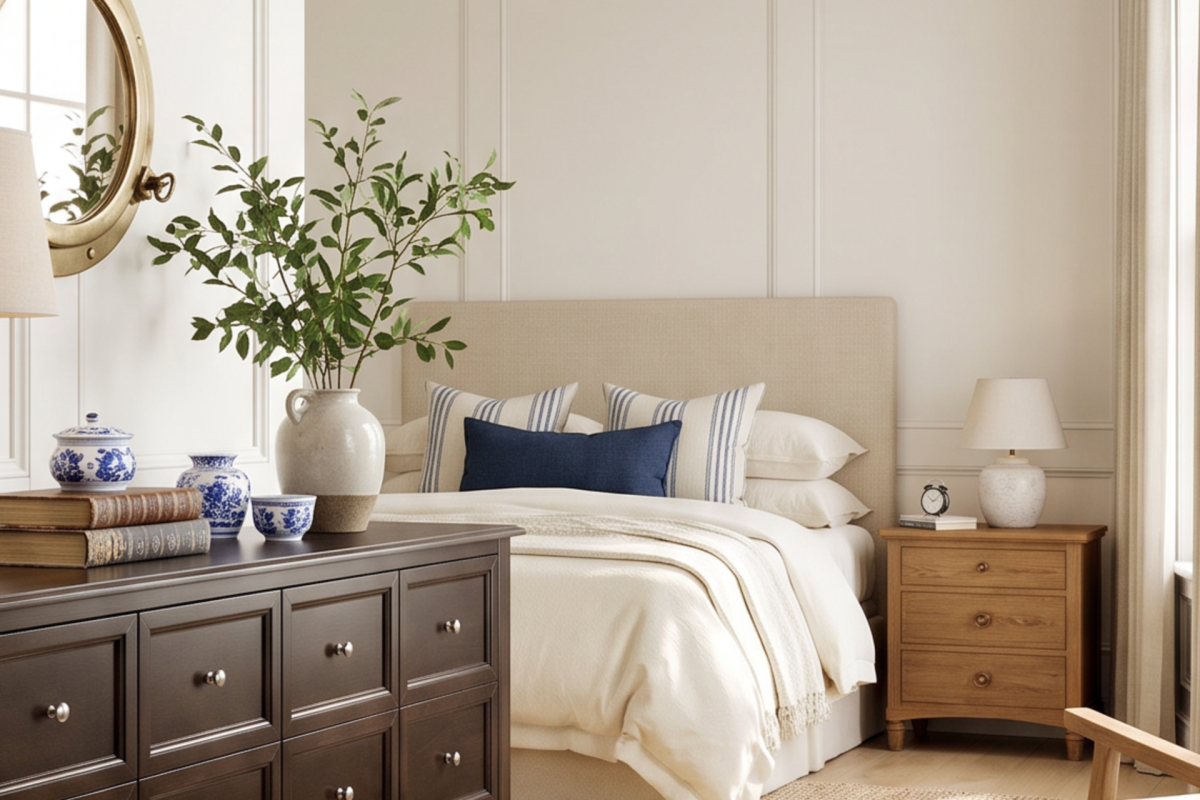
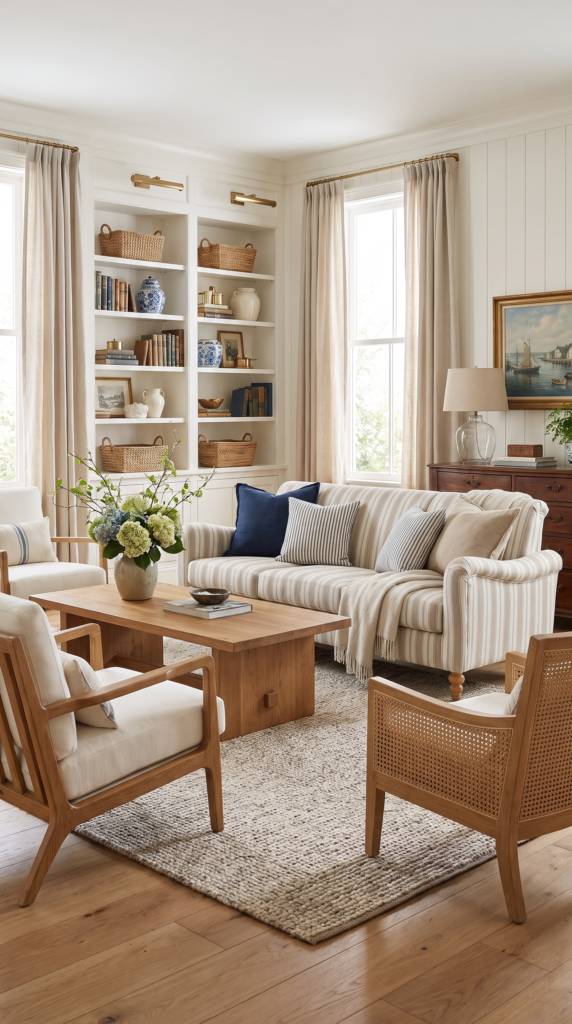
A blue-and-white porcelain jar might sit on an antique wood chest. A tailored linen sofa can share a room with an old harbor painting. A woven chair can sit beneath an aged-brass picture light. New pieces live comfortably beside objects that appear to have been passed down, discovered on a trip or picked up in an antique shop years ago.
Nantucket’s architecture tells a similar story. The island contains homes spanning centuries, from simple early houses to Federal and Greek Revival residences built during the prosperous whaling years. Much of that architectural character survives today.
So rather than recreating a beach cottage, we’re borrowing the layers that make those homes interesting.
The Nantucket Harbor Palette
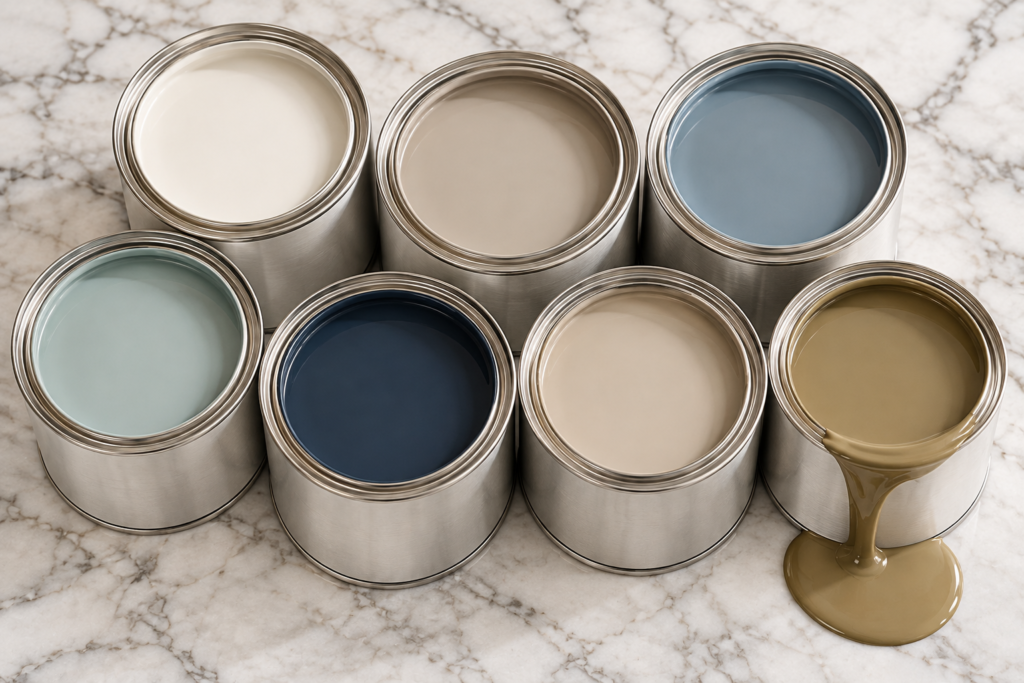
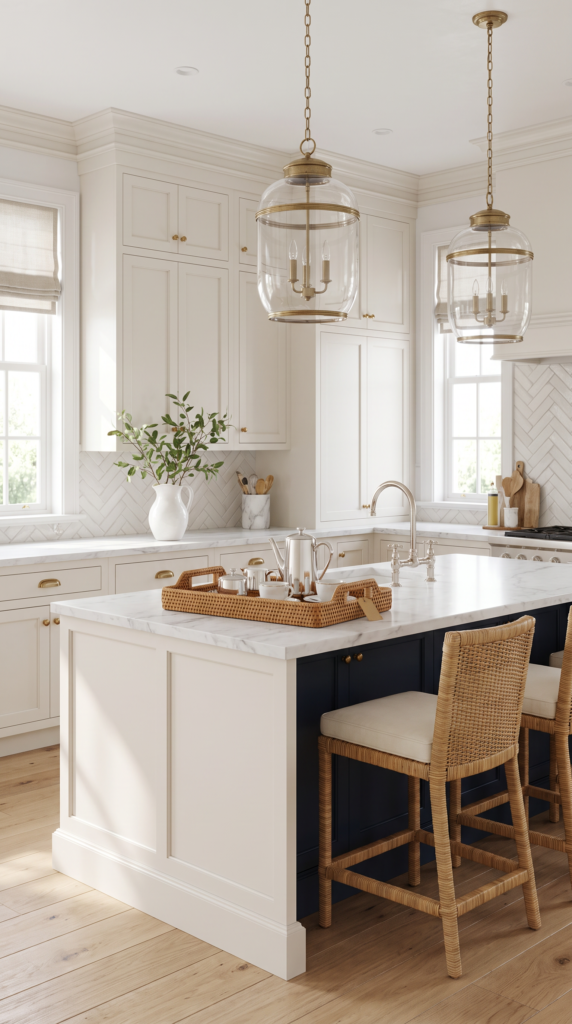
Warm white. Flax. Weathered oak. Walnut. Harbor blue. Deep navy. Soft gray. Aged brass.
Start with the colors you might encounter during a walk from an old Nantucket house toward the water.
Warm white. Flax. Weathered oak. Walnut. Harbor blue. Deep navy. Soft gray. Aged brass.
The foundation should remain warm and neutral.
Walls might be creamy white rather than stark white. Floors are natural oak instead of gray-washed wood. Upholstery stays primarily ivory, oatmeal and flax.
Then comes blue.
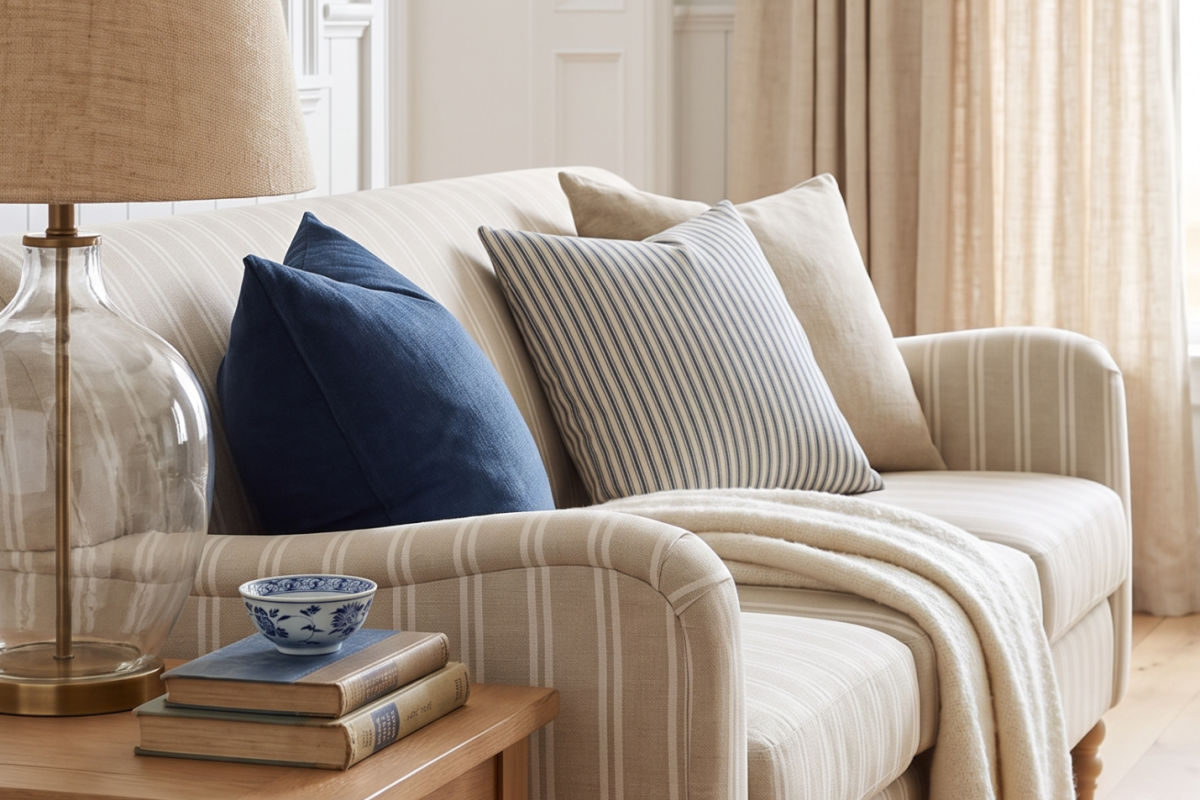
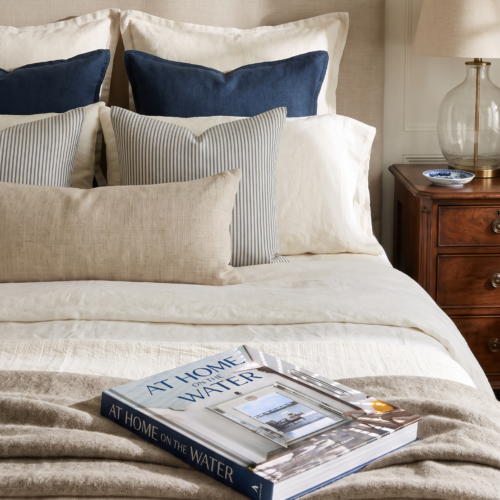
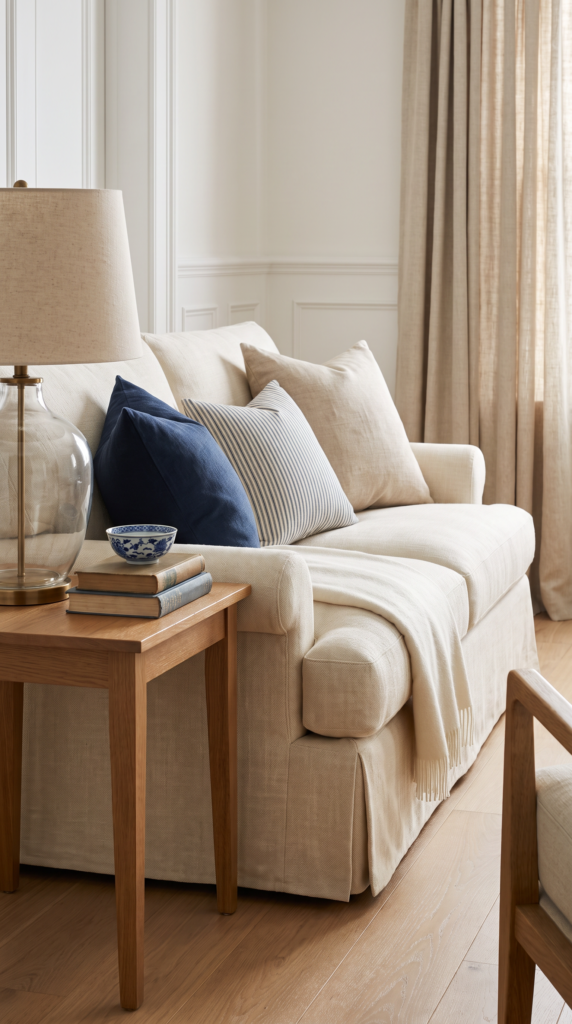
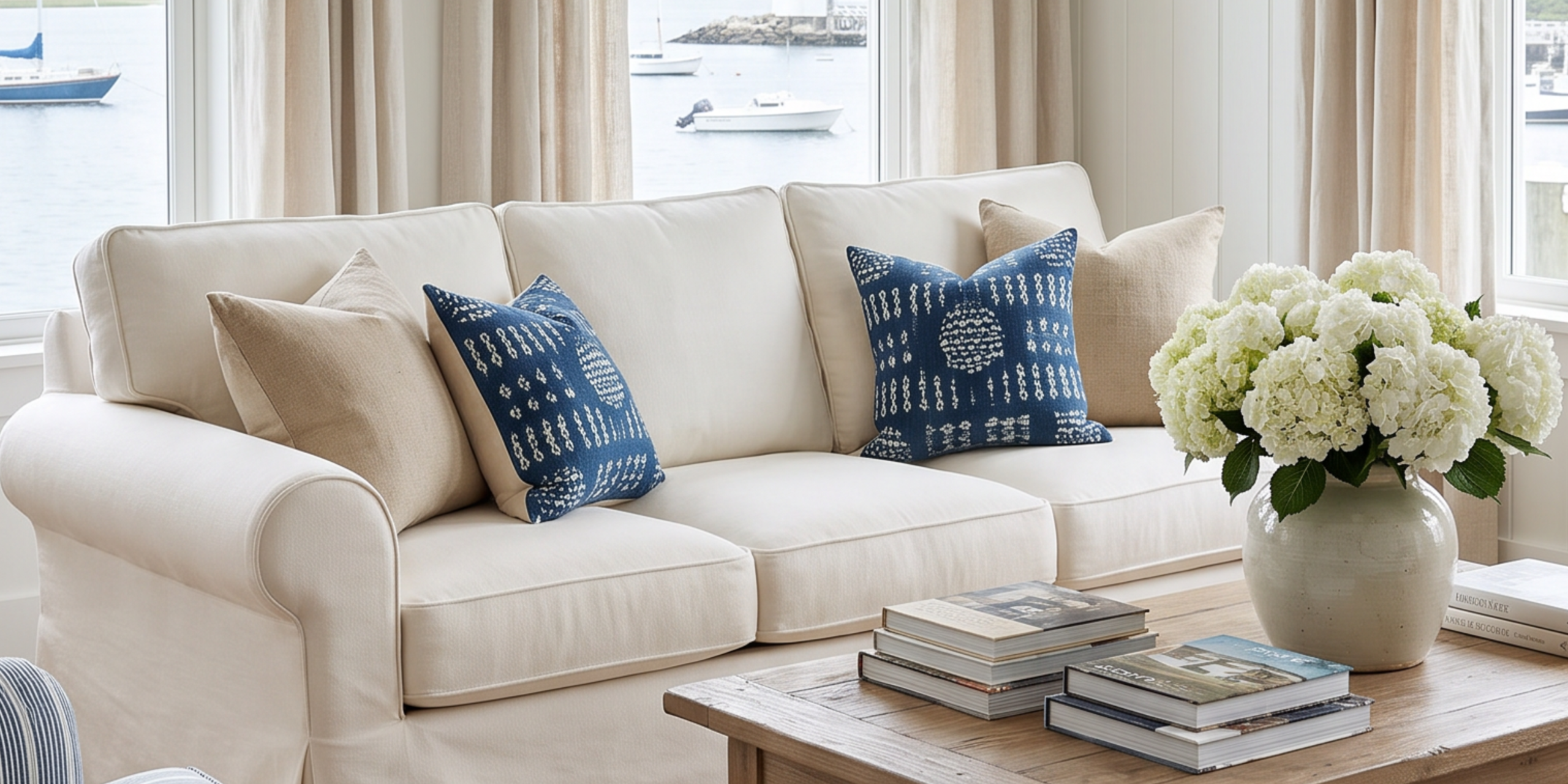
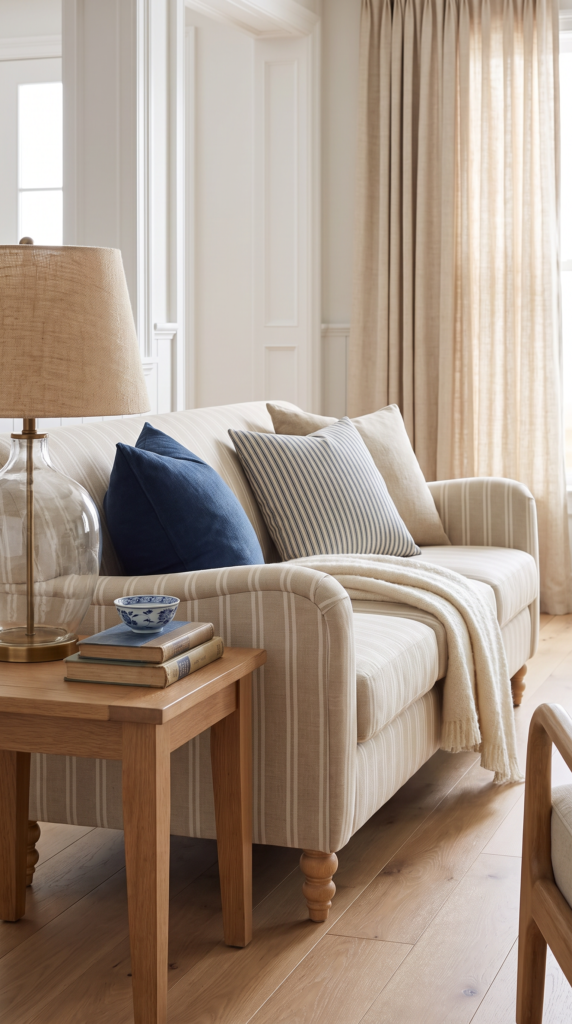
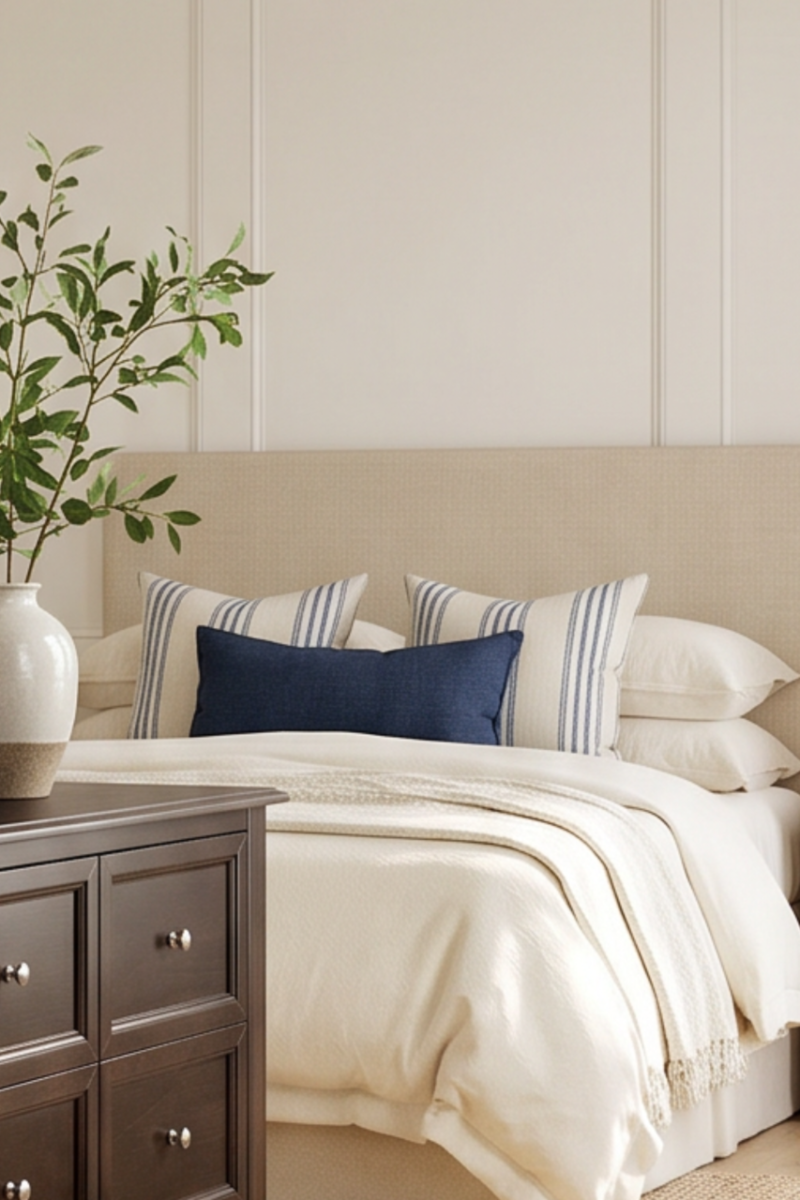
Deep navy gives the room structure, while softer harbor blues provide variation. Instead of covering the entire room in blue and white, use these colors as punctuation—a navy pillow, faded blue textile, blue-and-white porcelain jar or harbor painting.
The result feels coastal almost subconsciously.
It’s in the Details. Land2Shore Amazon Inspirations.
Bring Nantucket Harbor Home
As an Amazon Affiliate, Land2Shore earns from qualifying purchases
Comfortable, Tailored and Collected
Nantucket Harbor furniture should invite you to sit down, but it shouldn’t feel sloppy.
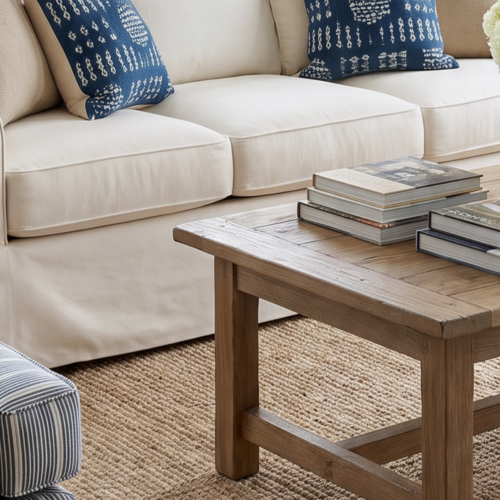
Begin with a substantial sofa upholstered in warm ivory or oatmeal linen. Look for generous cushions and classic proportions rather than exaggerated coastal slipcovers.
Then mix the furniture instead of matching it.
Try this combination: an ivory linen sofa, two exposed-oak chairs, one cane chair, a substantial oak coffee table and one antique walnut chest.
Nothing matches, yet everything belongs.
The Collected Layer
This is where Nantucket Harbor really develops personality.
Instead of shopping for “coastal accessories,” look for objects that could plausibly have been collected over many years.
Blue-and-white porcelain is an obvious choice—and one with an interesting historical connection. Nantucket’s prosperous maritime economy brought imported goods, including porcelains and silks, into island households.
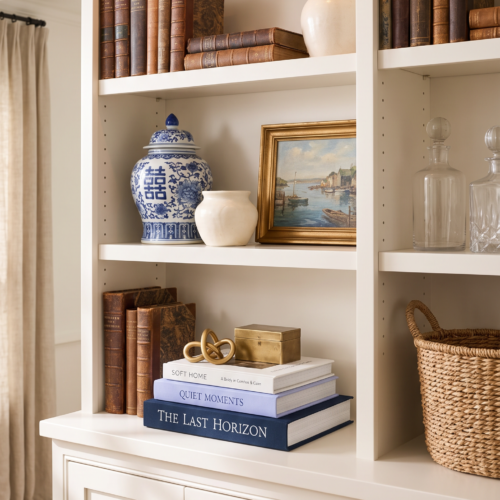
Use porcelain sparingly. One substantial ginger jar has more presence than a shelf filled with tiny matching pieces.
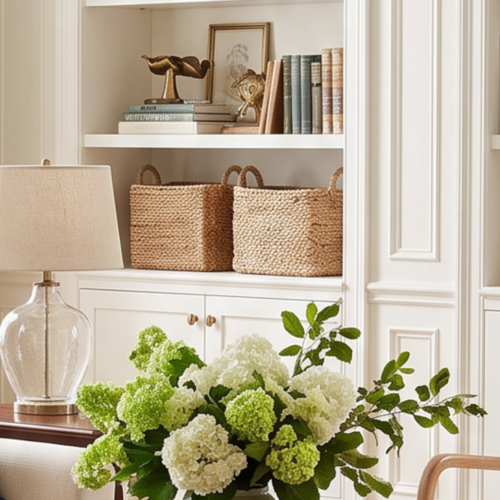
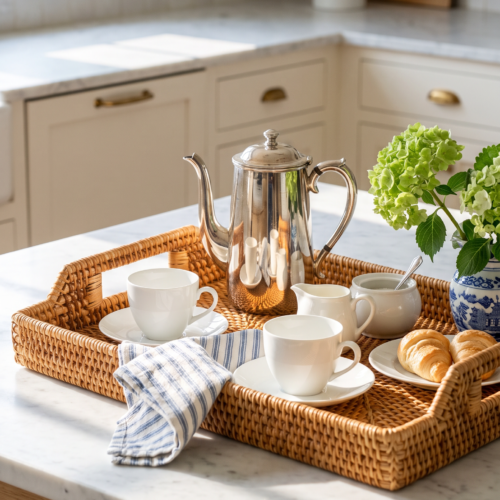
Add vintage hardcover books, hand-thrown pottery, woven baskets, aged-brass candlesticks, clear glass hurricanes and framed artwork.
Artwork is especially important.
Look for vintage harbor paintings, sailing scenes, landscapes, architectural sketches, old maps and understated botanical studies.
A woven Nantucket-style basket introduces texture and another connection to island craftsmanship.
And don’t be afraid of a few objects that aren’t coastal at all. A beautiful antique box, magnifying glass, small sculpture or inherited-looking piece keeps the room from becoming predictable.
What Nantucket Harbor Is Not
Perhaps the easiest way to understand this style is to know what we leave out.
You don’t need anchors on the walls.
You don’t need signs that say Beach.
You don’t need turquoise glass, distressed gray furniture, rope wrapped around every lamp or bowls overflowing with seashells.
There is nothing wrong with displaying something genuinely connected to the coast. A beautiful shell collected during a trip, an old maritime painting or an antique nautical instrument can be wonderful.
But it should feel like part of the home’s story rather than part of its theme.
Bringing Nantucket Harbor Home
You don’t need a weathered-shingle house overlooking Nantucket Sound to borrow from the island’s style.
Start with the foundation:
Warm whites. Natural wood. Linen. Beautiful architectural details.
Then add depth with navy, walnut, aged brass and polished nickel.
Bring in one or two woven pieces.
Choose a few blue-and-white ceramics.
Find artwork that looks as though it has a past.
And most importantly, resist the temptation to finish the room all at once.
Nantucket’s appeal comes partly from the fact that its homes and streets have evolved over centuries. Whaling prosperity, changing architectural tastes, tourism and generations of residents have all left their marks on the island. Even today, preservation efforts emphasize that Nantucket’s historic character exists inside its buildings as well as on their famous shingled exteriors.
That same philosophy works beautifully at home.
Let a room acquire its personality gradually.
A linen sofa today. An antique chest discovered next year. A blue-and-white jar from a weekend away. A painting you simply couldn’t leave behind.
Eventually, the room begins to feel less decorated and more lived in.
And that, more than any shade of blue or piece of coastal décor, captures what we love about Nantucket Harbor style:
timeless, refined, comfortable and collected—with the coast always quietly in the background